
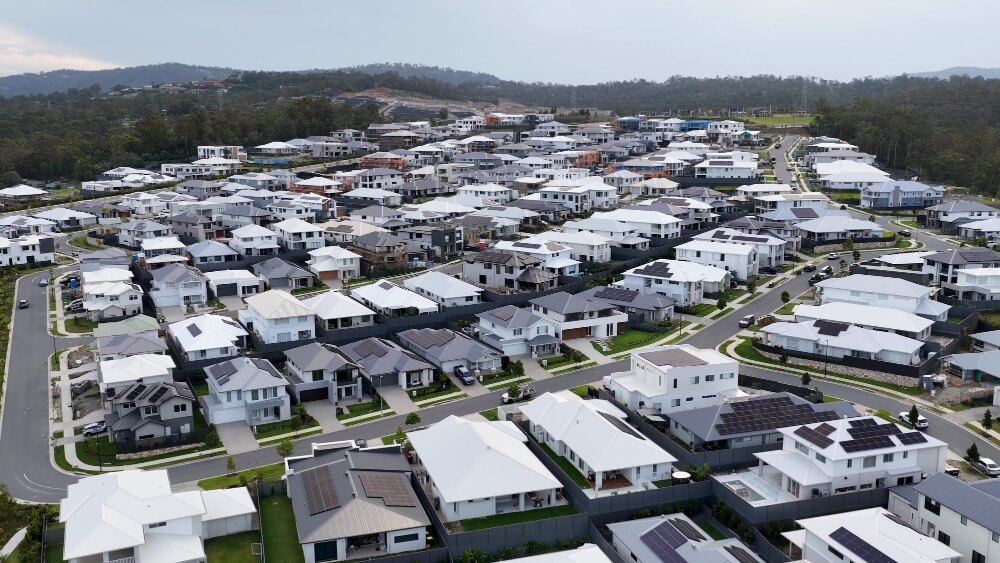
Mortgage renewals are changing affordability.
Canada’s housing market going into Q2 2026 isn’t being driven by dramatic price fluctuations or sudden demand spikes. The primary force right now is mortgage renewals, which are changing housing affordability and impacting how Canadians consider entering the market.
Recent national data show housing activity is subdued. Sales levels in March remained almost the same as the previous month, with a 0.1% decline. First-quarter activity is still tracking roughly 8% below the same time last year. Prices are still under pressure relative to earlier highs, with most regions showing stability.
Borrowing conditions have not provided much relief. Mortgage rates have gone up again recently as inflation expectations and financial conditions change, adding new strain for first-time buyers and existing homeowners facing renewal decisions.
Current Trend: The Renewal Cycle
The most important development in Canada’s current housing market is the scale of mortgage renewals moving through the system after years of historically low borrowing costs. Many homeowners who secured ultra-low fixed rates during the pandemic are now renewing at much higher rates.
That adjustment is causing issues beyond monthly payments. Behaviours in the housing market are changing. Higher renewal costs reduce household cash flow, slowing savings for down payments, limiting mobility for move-up buyers, and pushing some households to delay purchase decisions altogether.
The effect is cumulative. Even where prices have stabilized, affordability remains constrained because borrowing capacity is determined by past financing decisions rather than current income growth.
How This Feeds Into Shared Equity Demand
Shared equity housing models are gaining renewed attention in this environment because they address the part of the affordability challenge that has become most restrictive in 2026: upfront entry costs.
In a typical shared equity, a partner (usually a government, company, or individual investor) contributes a portion of the purchase price in exchange for a share of future appreciation. The buyer occupies the home and carries most ongoing costs, while reducing the initial capital required to enter the market.
In the current renewal-driven cycle, that structure becomes more relevant because many households still have income stability but less savings flexibility. Higher mortgage payments on existing homes or higher rents are absorbing funds that would normally go toward down payments. Shared equity effectively shortens the timeline required to move from renting or delayed ownership into market participation.
Why 2026 Conditions Are Different
Previous housing pressure points in Canada were driven primarily by rapid price growth or sharp interest rate increases. The current environment is formed by something more gradual but persistent.
The adjustment is coming from the staggered renewal of mortgages taken out during a period of unusually low borrowing costs. That means affordability pressure is not concentrated in a single shock event. It is spreading through households over time, creating a prolonged period in which many potential buyers are financially stretched, even if they remain technically qualified.
This is where discussions about shared equity are expanding. The focus is moving away from purely lowering monthly payments and toward reducing the upfront barrier that prevents market entry in the first place.
Market Conditions Reinforcing Change
Housing supply and demand are in a holding pattern throughout most of the country. Activity levels aren’t weak enough to signal a downturn, but not strong enough to create sustained price pressure upward. That balance makes affordability tools more relevant, as traditional market movements are not providing relief for new entrants.
In this type of environment, shared equity becomes less of a niche concept and more of a practical option for households that are financially stable but unable to accumulate large down payments while managing higher long-term housing costs.
Predictions for 2026
The remainder of 2026 will likely be defined by mortgage renewals working through the system and the gradual recalibration of household budgets. If borrowing conditions are elevated compared to pandemic-era levels, affordability pressure will stay focused at the entry point to homeownership.
Shared equity is a larger part of that discussion because it shifts the focus from waiting for price drops and lower rates to structuring ownership that aligns with current financial realities.
Connect / Follow:
Adam Gant on X
Adam Gant on Crunchbase
Adam Gant on F6s
Read Next:
Making a Move to Victoria, B.C. More Affordable
Evolving to Equitism in Housing: A Market-Driven Path to Shared Equity
Canada’s Housing Market Has Hit a Pause in Early 2026